• Skip to primary navigation
  • Skip to main content
  • Skip to primary sidebar

fundsforNGOs Q&A

Grants and Resources for Sustainability

  • Subscribe for Free
  • Premium Support
  • Premium Sign in
  • Premium Sign up
  • Home
  • Grants & Funding
    • Funds for NGOs
      • Agriculture, Food & Nutrition
      • Animals and Wildlife
      • Arts & Culture
      • Children
      • Civil Society
      • Community Development
      • Democracy and Good Governance
      • Economic Development
      • Education
      • Disability
      • Employment and Labor
      • Environment
      • Family Support
      • Healthcare
      • HIV and AIDS
      • Housing & Shelter
      • Humanitarian Relief
      • Human Rights
      • Human Service
      • Information Technology
      • Livelihood Development
      • LGBTQIA2S+
      • Media and Development
      • Narcotics, Drugs and Crime
      • Old Age Care
      • Peace & Conflict Resolution
      • Poverty Alleviation
      • Refugees, Migration & Asylum Seekers
      • Science & Technology
      • Sports & Development
      • Sustainable Development
      • Water, Sanitation & Hygiene (WASH)
      • Women & Gender
      • Youth & Adolescents
    • Donors & Funders
    • Funds for Companies
      • Accounts & Finance
      • Agriculture, Food and Nutrition
      • AI
      • Education
      • Energy
      • Environment
      • Healthcare
      • Innovation
      • Manufacturing
      • Media
      • Research
      • Startups & Early-Stage
      • Sustainable Development
      • Technology
      • Travel & Tourism
      • Women
      • Youth
    • Funds for Individuals
  • Funds in Your Country
  • Proposal Writing
    • Sample Proposals
    • Agriculture Proposals
    • Business Proposals
    • Child Development Proposals
    • Climate Change & Biodiversity Proposals
    • Community Development Proposals
    • Democracy & Good Governance Proposals
    • Disability Proposals
    • Disaster & Humanitarian Relief Proposals
    • Environment Proposals
    • Education Proposals
    • Healthcare Proposals
    • Housing & Shelter Proposals
    • Human Rights Proposals
    • Livelihood Development Proposals
    • Nutrition & Food Security Proposals
    • Poverty Alleviation Proposals
    • Refugees, Migration & Asylum-Seekers’ Proposals
    • Rural Development Proposals
    • Sustainable Development Proposals
    • Water, Sanitation & Hygiene (WASH) Proposals
    • Women & Gender Proposals
    • Youth Development Proposals
  • Premium
    • Premium Sign-in
    • Premium Grants
    • Premium eBooks
    • Premium Webinars
    • Premium Videos
    • Premium Courses
    • Premium Support
  • NGOs.AI
  • Contact
    • Submit Your Opportunity
    • Learning Lab
    • Q&A
    • News
    • About us
You are here: Home / imp / Is there a training manual or a guidebook on how to implement a project to reduce child poverty?

Is there a training manual or a guidebook on how to implement a project to reduce child poverty?

Dated: September 22, 2023

For the best experience, I suggest you to take a look at Arigatou International’s An Interfaith Guide to End Child Poverty: Inspire. Act. Change. that will provide you with the resources to equip you and faith leaders, faith communities and organisations with the relevant knowledge and skills needed to address child poverty effectively.
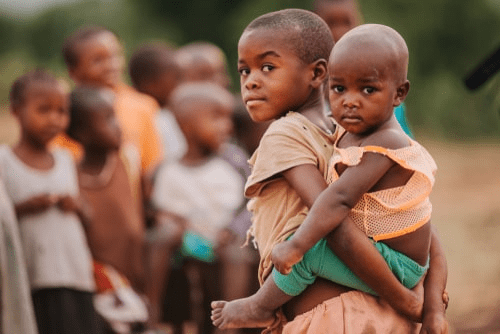
This Resource Guide will be a tool that will help faith communities to mobilise faith–inspired resources to end child poverty, empower their constituencies to take action, build networks and coalitions with like-minded actors around the world and hold policy makers accountable to ending poverty in general and especially, ending child poverty.

This guide provides a general overview of the nature and scope of child poverty that you can use for informational and educational purposes. Moreover, it highlights the positive roles that faith communities and their leaders can, (and in reality) do serve in advocating for the eradication of child poverty, and promoting interfaith coordination and collaboration in advancing children’s dignity and well-being.

The Guide is organised as follows:

  • A brief introduction to the Guide and its purpose;
  • Background to the topics to be discussed within the Guide;
  • A brief overview of Child Poverty and how this relates to Children’s Rights;
  • A general discussion on children, religion and spirituality;
  • The role of religious communities in combating Child Poverty;
  • The importance of engaging with key stakeholders and developing poverty eradication projects;
  • Conclusion

This guide has ten chapters, each dealing with a specific theme that analyses and relates various aspects of Child Poverty. The Guide is relevant and engaging to various audiences, for different purposes and different contexts. The guide can for instance be used as a resource to:

  • Build the leadership capacity of an organisation or institution;
  • Function as a training tool for adults and youth working with children;
  • Act as a study tool for educational purposes in academic environments; and
  • Provide practical tools and tips to help plan events and projects to alleviate Child Poverty.

How to use the Guide

This Guide is be used for various purposes and in different contexts, including to:

  • Build organisational leadership capacity;
  • As a training tool for adults and young people working with children, or as a study tool for educational purposes in an academic context.

After carefully reading and understanding the information contained in this Guide, you will be able to facilitate discussions, plan and initiate activities with themes related to child poverty. 

For more information, visit https://freeresources.fundsforngos.org/how-to-guides/a-free-interfaith-guide-to-end-child-poverty/

Primary Sidebar

What do NGOs often overlook when applying for the Renewed Women’s Voice and Leadership Program in Kenya?

Is the ReCIPE Programme PhD Research Grant a worthwhile opportunity for NGOs focusing on development issues?

Is the James Smithson Fellowship Program 2027 worth applying for? What key factors influence their selection process?

Is the CFAs: Storytelling and Artistic Commission Grants in Africa truly accessible for emerging creative entrepreneurs, or are there hidden hurdles in the application process?

Is the Storytelling and Artistic Commission Grant a good opportunity for creative projects in Nigeria, Kenya, and South Africa? What are key mistakes to avoid?

Is the International Compost Awareness Week Bookmark Contest worth applying for? What common mistakes should young artists avoid?

Is the International Compost Awareness Week Bookmark Contest a good opportunity for young artists? What should entrants know before applying?

Is the Faraday Discovery Fellowship Program a realistic opportunity for mid-career researchers in STEM to secure long-term funding?

Is the Faraday Discovery Fellowship Program worth the effort for mid-career researchers? What are some insider tips on its selection process?

Is the CRI Technology Impact Award worth applying for if you’re a small NGO focused on cancer research?

How can NGOs ensure their applications stand out for the InnovateHERs Scholarship Challenge?

Is the InnovateHERs Scholarship Challenge worth applying for, and what are the common pitfalls applicants face?

Is the 2026-27 KF Fellowship worth applying for? What are the hidden challenges and opportunities?

Is the NEH Collaborative Research Grant a viable opportunity for international NGOs focusing on American cultural studies?

Is the Pantaenius Yacht Racing Image Award really worth entering for professional photographers, and what are the common pitfalls to avoid?

Is the Pantaenius Yacht Racing Image Award worth applying for as a professional photographer? What do most miss about its selection criteria?

Is the Robotics for Good Youth Challenge really accessible to small NGOs? What should applicants know before applying?

What do NGOs often overlook when applying for the Water Research Foundation’s ROI Grants for Workforce Development?

Is the Water Research Foundation’s RFP for Internships and Development Programs really worth applying for? What do NGOs commonly overlook?

Is the Journalists in Residence Program at the University of Chicago worth applying for in 2026? What are the hidden challenges?

What are the hidden challenges NGOs face when applying for the Journalists in Residence Program?

What are the most common mistakes when applying for the Fjällräven Field Research Grant Program, and how can they be avoided?

What do applicants often overlook in the Fjällräven Field Research Grant Program application process?

What do most NGOs miss when applying for the Henry Moore Grants Program funding?

Is the Henry Moore Grants Program worth applying for? What do most NGOs overlook in their applications?

©FUNDSFORNGOS LLC.   fundsforngos.org, fundsforngos.ai, and fundsforngospremium.com domains and their subdomains are the property of FUNDSFORNGOS, LLC 1018, 1060 Broadway, Albany, New York, NY 12204, United States.   Unless otherwise specified, this website is not affiliated with the abovementioned organizations. The material provided here is solely for informational purposes and without any warranty. Visitors are advised to use it at their discretion. Read the full disclaimer here. Privacy Policy. Cookie Policy.

Manage Consent
To provide the best experiences, we use technologies like cookies to store and/or access device information. Consenting to these technologies will allow us to process data such as browsing behavior or unique IDs on this site. Not consenting or withdrawing consent, may adversely affect certain features and functions.
Functional Always active
The technical storage or access is strictly necessary for the legitimate purpose of enabling the use of a specific service explicitly requested by the subscriber or user, or for the sole purpose of carrying out the transmission of a communication over an electronic communications network.
Preferences
The technical storage or access is necessary for the legitimate purpose of storing preferences that are not requested by the subscriber or user.
Statistics
The technical storage or access that is used exclusively for statistical purposes. The technical storage or access that is used exclusively for anonymous statistical purposes. Without a subpoena, voluntary compliance on the part of your Internet Service Provider, or additional records from a third party, information stored or retrieved for this purpose alone cannot usually be used to identify you.
Marketing
The technical storage or access is required to create user profiles to send advertising, or to track the user on a website or across several websites for similar marketing purposes.
  • Manage options
  • Manage services
  • Manage {vendor_count} vendors
  • Read more about these purposes
View preferences
  • {title}
  • {title}
  • {title}